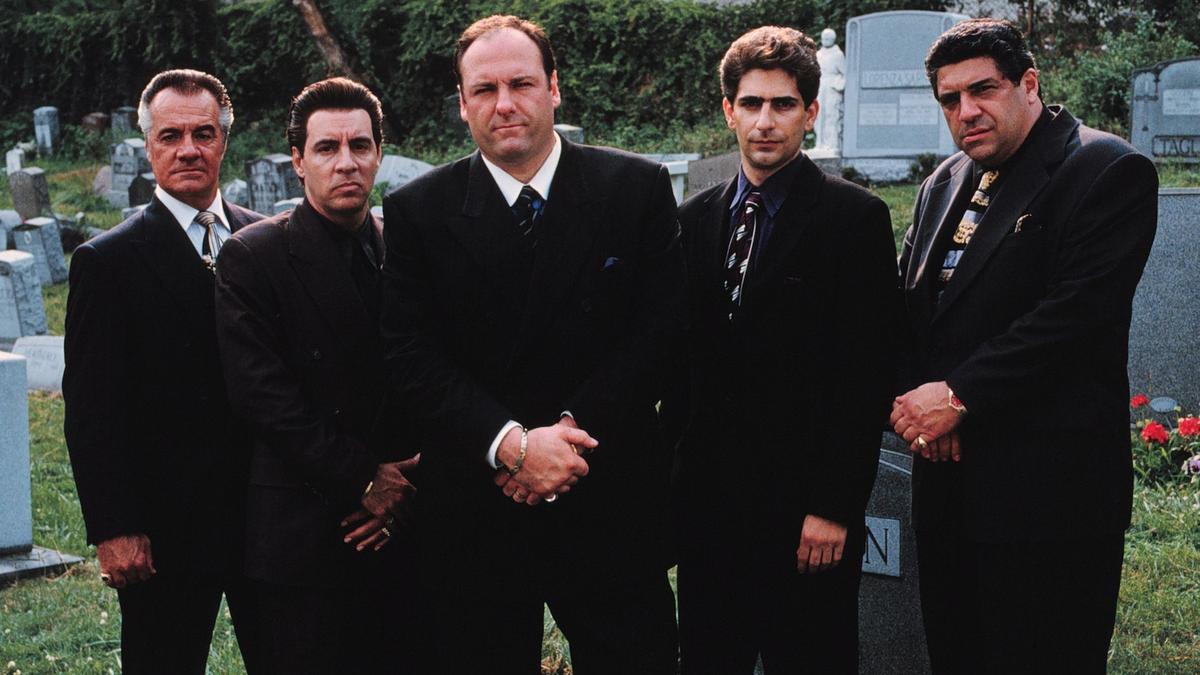
How The Sopranos Redefined Television Storytelling
The moment television became something else
There is a clear before and after in television history, and The Sopranos sits right at the center of that shift. Before it, television drama operated within limits — narrative, structural and even emotional. After it, those limits no longer existed. The series didn’t just tell a story about organized crime; it redefined how stories could be told on television.
What made it revolutionary wasn’t its premise, but its execution. A mob boss in therapy could have been a simple hook, a clever twist. Instead, it became the foundation for one of the most complex character studies ever seen on screen. Tony Soprano is not a symbol, nor a traditional antihero. He is a contradiction in constant motion, and that is where the series finds its true power.
Quick View
Concept: A crime drama centered on identity, power and psychological conflict.
Style: Intimate, character-driven and grounded in realism.
Approach: Blends domestic life with organized crime through a psychological lens.
Average Rating: Consistently ranked among the greatest series ever made.
Context: A foundational show that paved the way for modern prestige television.
A character study disguised as a crime story
At first glance, The Sopranos fits within the crime genre. It deals with hierarchy, violence, loyalty and power structures. But the series quickly moves beyond those conventions. The real narrative unfolds in the spaces between action — in conversations, silences and internal conflict.
Tony’s sessions with Dr. Melfi are not just narrative devices; they are the emotional core of the series. Through them, the show explores anxiety, identity and the fragile balance between personal life and professional role. This psychological depth was unprecedented at the time, and it remains one of the defining aspects of the series.
Breaking the idea of the traditional protagonist
One of the boldest choices the series makes is refusing to guide the audience toward a moral conclusion. Tony Soprano is not framed as someone to admire or to reject. He exists in a space that is deliberately uncomfortable, forcing viewers to confront their own reactions to his actions.
This ambiguity extends to the entire cast. Every character operates within shades of gray, shaped by personal motivations rather than narrative necessity. The result is a world that feels unpredictable and deeply human.
The rhythm of real life
Unlike many series that rely on constant escalation, The Sopranos embraces a slower, more reflective pace. Episodes often prioritize atmosphere over plot progression, allowing moments to breathe and characters to evolve organically.
This rhythm can feel unconventional, but it is precisely what gives the series its authenticity. Life does not move in straight lines, and neither does the narrative. That willingness to step away from traditional structure is part of what makes the show so distinctive.
How it has aged: still ahead of its time
More than two decades after its premiere, the series continues to feel modern. Not because of its setting or aesthetics, but because of its thematic depth. Issues like mental health, identity and moral complexity remain as relevant as ever.
Many of the shows that followed owe a clear debt to The Sopranos. The rise of the antihero, the focus on long-form storytelling and the emphasis on character-driven narratives can all be traced back to its influence.
Final verdict
The Sopranos is not just a great series — it is a turning point. A work that expanded the possibilities of television and established a new standard for storytelling.
It didn’t try to be accessible. It didn’t try to please everyone. It simply committed to its vision, and in doing so, it changed the medium forever.
The legacy of The Sopranos also includes its much-debated finale. Explore our analysis of television’s most controversial endings.
For the original perspective in Spanish, read our analysis of Los Soprano and their influence on modern television.
If you want to continue exploring complex crime television, see our analysis of The Wire and our review of MobLand, two contrasting portraits of power and organised crime.