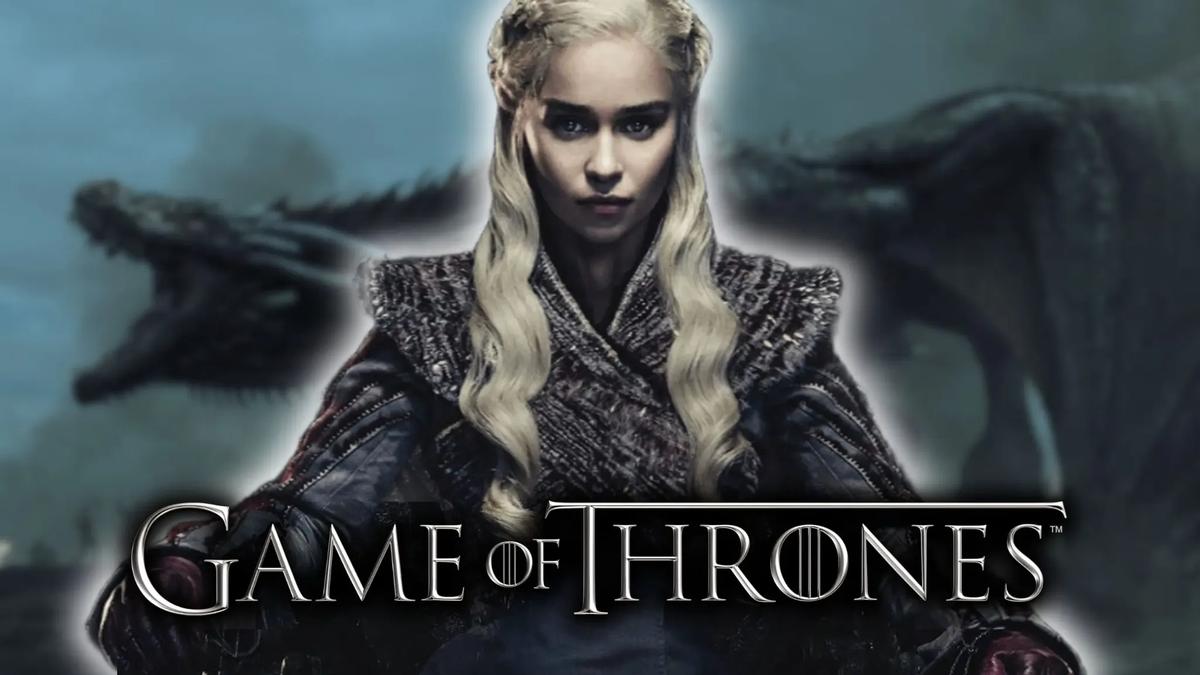
How Game of Thrones Changed Television Forever
A television phenomenon that went beyond the screen
Very few series manage to break out of their own medium and become part of a broader cultural conversation. Game of Thrones didn’t just succeed as a television show — it reshaped the expectations of what television could achieve. It turned weekly episodes into global events, blurred the line between cinema and TV, and proved that audiences were ready for complex, morally ambiguous storytelling on a massive scale.
But its impact cannot be reduced to dragons, battles or production value. What truly set it apart was its ability to combine spectacle with narrative depth. It built a world that felt alive, unpredictable and constantly shifting, where power was never secure and every decision carried weight.
Quick View
Concept: A political and fantasy epic driven by power, ambition and survival.
Style: Cinematic, large-scale and character-focused.
Approach: Multiple storylines woven into a single evolving narrative.
Average Rating: One of the highest-rated series across global platforms.
Context: A defining show of its generation that changed the industry.
Scale and ambition: redefining television production
Before Game of Thrones, large-scale fantasy storytelling was almost exclusively reserved for cinema. Television, even at its best, operated within clear technical and budgetary limits. This series challenged that idea from the very beginning.
Each season expanded its scope, not only in terms of geography and narrative complexity, but also in visual execution. Massive battle sequences, detailed set design and cinematic direction became standard rather than exception. The show didn’t just raise the bar — it forced the entire industry to reconsider what television could look like.
Power, politics and moral ambiguity
At its core, the series is not about fantasy — it is about power. Thrones are symbolic, but the real story lies in the strategies, alliances and betrayals that shape the world of Westeros. Characters are rarely defined by clear moral lines. Instead, they evolve, adapt and sometimes contradict themselves in ways that feel deeply human.
This complexity is one of the reasons the show resonated so strongly. Viewers were not guided toward a single perspective. Instead, they were forced to navigate a landscape where right and wrong were constantly shifting.
Characters that carried the story
Few series have managed to build such a vast ensemble while maintaining emotional investment across so many storylines. From the Stark family’s sense of honor to the Lannisters’ calculated ambition, every character arc contributes to a larger tapestry.
The strength of the writing lies in how these arcs intersect. No storyline exists in isolation. Every decision has consequences that ripple across the narrative, reinforcing the sense that this world operates under its own internal logic.
The turning point: from precision to spectacle
As the series progressed, its focus gradually shifted. Early seasons prioritized dialogue, strategy and slow-burning tension. Later seasons leaned more heavily on spectacle and resolution. This transition sparked debate among audiences, highlighting the delicate balance between narrative depth and visual payoff.
While opinions differ on how successfully the series handled its final stretch, this evolution is part of its identity. It reflects the challenge of sustaining a story of such scale over time.
How it has aged: a lasting benchmark
Despite the controversies surrounding its ending, Game of Thrones remains a reference point in modern television. Its influence can be seen in the ambition of newer productions, in the willingness to invest in large-scale storytelling, and in the audience’s expectations for complexity.
Very few series have matched its ability to dominate the cultural conversation. Even fewer have managed to replicate its combination of scale, character and unpredictability.
Final verdict
Game of Thrones is more than a successful series — it is a turning point. A production that expanded the boundaries of television and proved that the medium could rival cinema in both scope and impact.
Its legacy is not defined solely by how it ended, but by how it changed the landscape. And that alone is enough to secure its place as one of the most important series ever made.
Few series illustrate the challenge of meeting audience expectations like Game of Thrones. We also discuss its conclusion in our look at divisive television finales.
The original universe has continued to evolve. Read our review of A Knight of the Seven Kingdoms for a different approach to Westeros storytelling.
For the same analysis in Spanish, read our review of Juego de Tronos and its lasting influence on television.