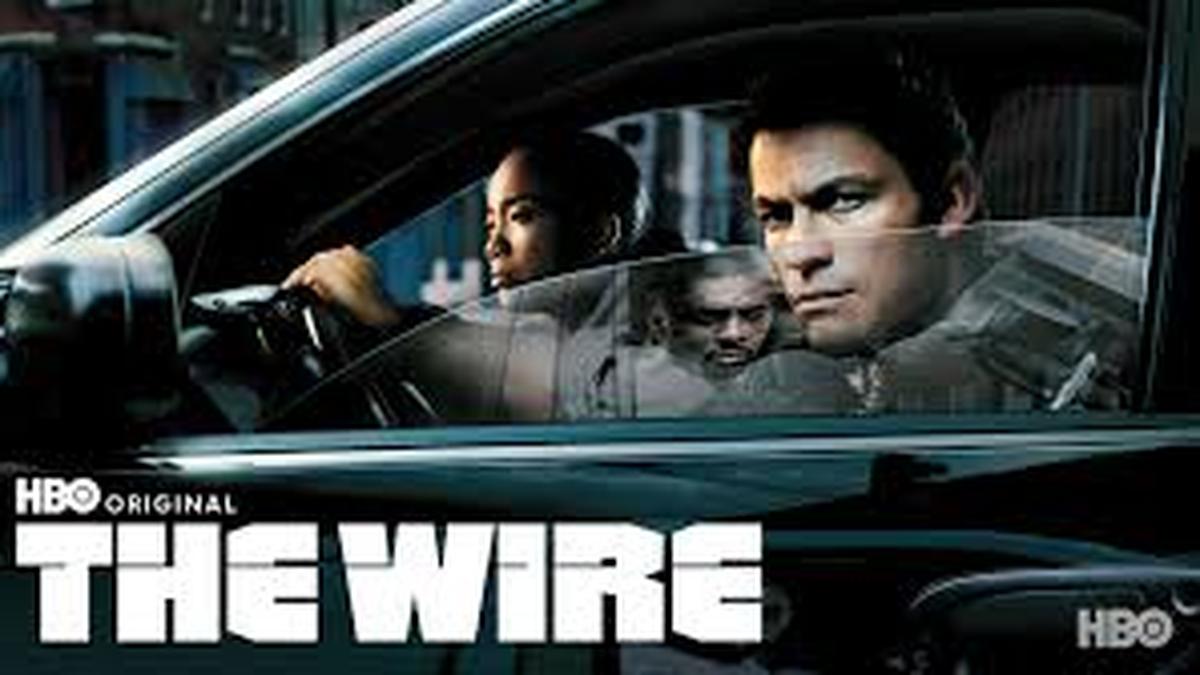
Why The Wire Remains One of the Greatest Series Ever Made
A series that refused to simplify reality
Some series aim to entertain, others aim to impress. The Wire set out to do something far more complex: to observe, dissect and understand a system. It is not structured as a traditional narrative driven by twists or emotional manipulation. Instead, it unfolds as a detailed examination of interconnected institutions, each shaping and limiting the individuals within them.
This approach makes the series demanding, but also uniquely rewarding. It doesn’t guide the viewer with clear answers or simplified conflicts. It presents a world where problems are systemic, where solutions are temporary and where progress often feels like an illusion.
Quick View
Concept: A multi-layered exploration of urban systems through crime, politics and society.
Style: Realistic, methodical and deeply observational.
Approach: Institutional storytelling over individual hero narratives.
Average Rating: Consistently ranked among the greatest series of all time.
Context: A landmark show that redefined what television drama could achieve.
Beyond crime: a study of systems
At a surface level, The Wire can be seen as a crime drama. It deals with police investigations, drug operations and the mechanics of law enforcement. But this is only the entry point. Each season expands the scope, shifting focus to different institutions — the port system, politics, education, media — revealing how they intersect and influence one another.
This structure transforms the series into something much broader than a genre piece. It becomes a portrait of a city, and by extension, a reflection of larger societal dynamics.
Characters shaped by their environment
Unlike many series that center on strong individual arcs, The Wire emphasizes how environment shapes behavior. Characters are not simply making choices; they are responding to systems that constrain and define them.
Figures like McNulty or Omar stand out, but they are not exceptions to the rules of the world. They are products of it. This perspective removes the illusion of control that traditional narratives often rely on, replacing it with a more grounded and sometimes unsettling reality.
The absence of easy answers
One of the most distinctive aspects of the series is its refusal to provide clear resolutions. Conflicts are rarely solved in a definitive way. Success is often partial, temporary or overshadowed by larger systemic issues.
This lack of closure is not a weakness — it is a deliberate choice. It reinforces the idea that the problems being explored are not isolated events, but ongoing conditions.
Structure and pacing: a different rhythm
The Wire demands patience. Its pacing is deliberate, often prioritizing context and detail over immediate payoff. Early episodes can feel slow, but they lay the groundwork for a narrative that gains depth as it progresses.
This structure mirrors the complexity of the world it depicts. Understanding takes time, and the series respects that. It does not rush to conclusions or simplify its themes for accessibility.
How it has aged: more relevant than ever
Few series have aged as well as The Wire. Its themes — institutional failure, social inequality, systemic inertia — remain strikingly relevant. If anything, its perspective feels even more urgent in today’s context.
Its influence is evident in many modern productions, but its depth and consistency remain difficult to match. It is not just remembered as a great series — it is studied as a model of what television can achieve.
Final verdict
The Wire is not designed for easy consumption. It is built for reflection. A series that challenges the viewer to engage with complexity rather than escape from it.
It doesn’t offer comfort. It offers understanding. And that is precisely why it stands as one of the greatest achievements in television history.
If you enjoy comparing television masterpieces, read our look at how Breaking Bad redefined character transformation.
You can also read our Spanish analysis of The Wire and its enduring influence on television.
To see another cornerstone of the modern crime drama, explore our analysis of The Sopranos, a very different yet equally influential portrait of power.
For a more contemporary, plot-driven take on organised crime, compare this classic with our review of MobLand.