A Knight of the Seven Kingdoms proves Game of Thrones needed to feel human again
The biggest surprise of a surprisingly weak year
We’re reaching the middle of the year, and for the first time in a long while, the conversation around television feels strangely quiet. There have been decent shows, entertaining releases and a handful of big-budget productions, but very few series that genuinely feel memorable once the credits roll.
That’s what makes A Knight of the Seven Kingdoms such an unexpected success story.
Going into the year, almost nobody had this show at the top of their lists. It didn’t arrive with the same pressure as House of the Dragon, nor did it carry the impossible expectations that followed every major project connected to Game of Thrones. In many ways, it felt like a smaller side story inside a gigantic franchise.
Ironically, that may have been its greatest advantage.
Because while so many modern fantasy series are obsessed with becoming louder, darker and more expensive, A Knight of the Seven Kingdoms quietly does something very different: it remembers why people fell in love with Westeros in the first place.
Not because of dragons.
Not because of massive wars.
Not because every episode needs to feel like the end of the world.
But because this universe works best when it feels human.
📊 Quick View
🎬 Concept: A smaller and more personal story set inside the world of Westeros.
🧠 Focus: Character-driven storytelling over spectacle and scale.
⚡ Approach: Medieval adventure with grounded drama and quieter pacing.
⭐ Level: The best new TV series of the year so far.
🧩 Context: HBO shifts away from dragon-heavy storytelling toward classic fantasy roots.
The smartest thing the show does is refusing to compete with Game of Thrones
One of the reasons the series works so well is because it never tries to outdo Game of Thrones. It understands something that many franchises eventually forget: bigger does not automatically mean better.
For years, television fantasy has been trapped in an endless escalation problem. Every new season needs more battles, more visual effects, more destruction and more “event television” moments designed to dominate social media for a weekend.
Eventually, exhaustion sets in.
The original Game of Thrones became a phenomenon because of political tension, dialogue, betrayal and atmosphere long before dragons fully took over the story. Some of the best moments in the entire series were simply conversations between characters inside rooms, taverns or camps.
Over time, however, the franchise increasingly leaned into spectacle. House of the Dragon simplified the political side by focusing mostly on one family, but it also became heavily dependent on dragons and large-scale conflict.
A Knight of the Seven Kingdoms goes in the opposite direction.
Dragons exist here mostly as distant mythology. People talk about them, history remembers them, but the show never feels obsessed with constantly putting them on screen. Instead, the focus stays where it belongs: on people, relationships and the journey itself.
Westeros feels alive again
Perhaps the most refreshing aspect of the show is how grounded everything feels.
For the first time in years, Westeros no longer feels like a world permanently trapped in apocalypse mode. The series slows down enough to let viewers actually experience the kingdom again. Roads, inns, tournaments, villages and ordinary people finally matter.
That medieval atmosphere was always one of George R. R. Martin’s greatest strengths, and the show taps directly into it.
There’s less focus on prophecy, destiny and magical lore, and much more attention placed on everyday survival, honor, reputation and companionship. The result feels closer to a classic medieval adventure than modern blockbuster fantasy.
And honestly, that’s exactly why it stands out.
Modern fantasy television has become increasingly obsessed with scale. Every story has to involve the fate of kingdoms or the collapse of civilization itself. A Knight of the Seven Kingdoms proves that smaller stories can sometimes feel far more engaging.
Dunk and Egg carry the entire series
The casting has been one of the show’s biggest victories.
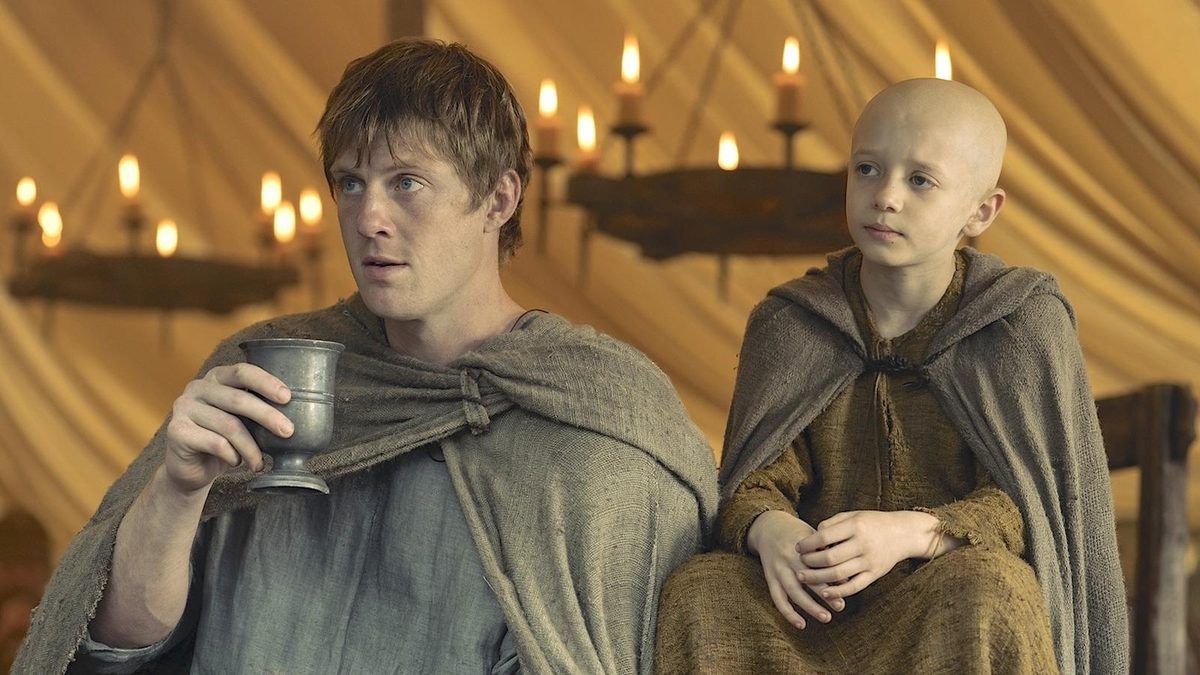
The chemistry between Dunk and Egg immediately gives the series warmth and personality. Their dynamic feels natural, funny and emotionally grounded in a way that many fantasy shows struggle to achieve.
Dunk works because he doesn’t feel like a legendary hero. He isn’t a genius strategist, a chosen one or an unstoppable warrior. He’s simply a decent man trying to survive inside a complicated world while holding onto his principles.
That simplicity becomes incredibly powerful.
After years of watching ambitious rulers, broken antiheroes and power-hungry families destroy each other, there’s something refreshing about following a protagonist who still feels approachable and human.
Egg complements him perfectly, creating a partnership that gives the series its emotional core. Together, they bring back the sense of travel and adventure that largely disappeared from later seasons of Game of Thrones.
The one major problem: the episodes feel too short
If there’s one criticism that keeps coming up, it’s the runtime.
Ironically, most modern streaming series suffer from the exact opposite problem. Many shows have become bloated, dragging simple stories across episodes that run well over an hour.
Here, the issue feels reversed.
The episodes move so efficiently and the world feels so immersive that many chapters end just as they fully pull you in. Visually, the production quality is excellent. The locations, costumes and cinematography constantly reinforce the medieval realism the series is aiming for.
Because of that, the shorter runtime can occasionally feel frustrating.
A slightly longer format — somewhere around 45 minutes — probably would have allowed certain emotional beats and side characters to breathe more naturally without losing the show’s pacing.
Still, it’s hard to complain too much when the biggest issue is simply wanting more time inside the story.
Even George R. R. Martin seems more excited about this series
One of the most interesting aspects surrounding the show has been George R. R. Martin’s own reaction to it.
The author has publicly shown far more enthusiasm toward A Knight of the Seven Kingdoms than some of the franchise’s other recent projects, and it’s not difficult to understand why.
This series feels much closer to the emotional core of his writing. It prioritizes people over mythology, relationships over spectacle and atmosphere over constant escalation.
That balance is precisely what made Westeros fascinating from the very beginning.
For all the dragons, wars and political chaos, Martin’s world only works when the audience genuinely cares about the people living inside it.
Conclusion
Personally, both Game of Thrones and House of the Dragon eventually became exhausting in their own ways. Not because they were bad shows, but because every season felt determined to become larger, darker and more chaotic than the one before it.
A Knight of the Seven Kingdoms succeeds because it refuses to play that game.
This isn’t a story driven by endless wars between massive houses fighting for control of the realm. The Starks, Targaryens, Lannisters and Baratheons still exist in the background, but they no longer consume every scene.
Instead, the story focuses on a simple knight and a young boy traveling across Westeros. And somehow, that smaller perspective ends up making the world feel bigger again.
That may ultimately be the show’s greatest achievement.
After years of trying to constantly raise the stakes, HBO finally remembered something essential: Westeros was always at its best when it felt lived in, personal and human.
For more context on the original show’s influence, read our analysis of how Game of Thrones changed television.
A smaller-scale visit to Westeros also fits into our wider discussion about how much television storytelling a successful world really needs.
Read our original Spanish analysis of A Knight of the Seven Kingdoms for the corresponding editorial perspective.