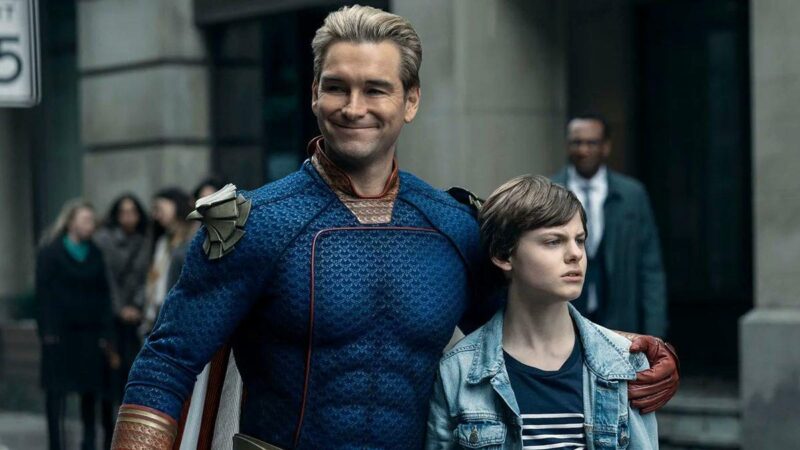
The Boys ended far from its peak… but still changed superhero television
A series that arrived just as the superhero genre was burning out
For years, superhero stories felt unstoppable. Marvel dominated theaters, DC continued generating massive discussion online, and audiences seemed willing to consume almost anything connected to capes, powers or cinematic universes. But eventually, fatigue started to settle in. Bigger franchises, endless spin-offs and constant interconnected storytelling slowly began losing their impact.
That is exactly why The Boys exploded the way it did. It did not feel like another traditional superhero show. It felt angry, cynical, violent and completely unfiltered. While most superhero productions still presented heroes as symbols people should admire, The Boys turned them into corrupt celebrities, unstable narcissists and dangerous public figures obsessed with power and image.
The series arrived at the perfect cultural moment. Audiences were starting to crave something different, and The Boys understood that immediately. It took the familiar superhero formula and twisted it into something far uglier, far messier and, most importantly, far more unpredictable.
That unpredictability became its identity.
📊 Quick View
🎬 Concept: A brutal satire about superheroes, celebrity culture and the corruption that comes with power.
🧠 Focus: Social criticism mixed with violence, dark comedy and morally broken characters.
⚡ Approach: Chaotic, provocative and intentionally uncomfortable.
⭐ Level: One of the most influential superhero TV shows of the streaming era.
🧩 Context: The series ends after five seasons, leaving behind a huge legacy despite weaker final chapters.
The excess became both its strength and its weakness
Part of what made The Boys so unique was its obsession with escalation. Every season tried to go further than the last one. More violence, more shock value, more uncomfortable scenes and more moments designed to make viewers stare at the screen wondering how a mainstream show was even allowed to exist.
At its best, that chaos actually served a purpose. The series used its outrageous tone to reinforce the satire underneath everything else. It was constantly mocking celebrity worship, political manipulation, corporate hypocrisy and the terrifying relationship between power and media influence.
But eventually, the need to constantly shock the audience started becoming a problem too. Some scenes felt less meaningful and more designed purely to create online reactions. The excessive language, the endless need to provoke and some sexual sequences pushed the formula a little too far at times.
A certain level of madness was necessary because it was part of the DNA of the show. But when a series spends years trying to outdo itself, there is always a risk that the excess stops feeling surprising and starts feeling repetitive.
And in some of the later seasons, that exhaustion became noticeable.
Homelander became one of television’s most terrifying characters
If there is one thing people will remember forever about The Boys, it is Homelander. Not simply because he is evil, but because the show transformed him into something far more uncomfortable than a standard villain.
He is terrifying because he feels believable.
Homelander is emotionally broken, deeply insecure and completely addicted to public validation. Yet despite all of that, viewers often found themselves fascinated by him. Sometimes even rooting for him against their own instincts.
That contradiction is part of what made the character so brilliant. The Boys understood that modern audiences are drawn toward powerful public figures even when they know those figures are dangerous. The show constantly played with ideas of populism, blind loyalty, media manipulation and cult-like celebrity obsession.
Antony Starr delivered one of the strongest television performances of the last decade. Even when the series itself became uneven, Homelander remained the center of attention every single time he appeared on screen.
Season three was clearly the peak of the show
Looking back at the entire series, there is a fairly common feeling among viewers: season three was the absolute high point of The Boys.
Everything seemed perfectly balanced during that period. The show was still chaotic and extreme, but the emotional tension between the characters remained strong enough to support the madness. The conflict between Butcher and Hughie worked extremely well, Soldier Boy brought fresh energy into the story and the series still felt creatively dangerous.
It was the moment where The Boys fully entered mainstream pop culture while still maintaining the raw identity that made people fall in love with it in the first place.
Unfortunately, reaching that level also created a major problem. Once a series hits its creative peak, maintaining that intensity becomes incredibly difficult.
Season four already showed signs of fatigue, but season five especially felt weaker than what came before. The tension was lower, some storylines felt stretched and the overall formula no longer carried the same explosive energy it once had.
The show still had strong moments, but it no longer felt unstoppable.
The ending worked better than many expected
Because of that decline, the final season carried enormous pressure. Ending a beloved series is always difficult, especially one that built such a passionate fanbase over multiple years.
And honestly, considering the weaker trajectory of the final seasons, the conclusion itself turned out surprisingly solid. Maybe it was simpler than some viewers expected, and maybe it lacked one final unforgettable emotional punch, but it still understood something important: the characters mattered more than the spectacle.
The emotional core of the series had always revolved around figures like Homelander and Butcher, and the finale focused heavily on giving those relationships a proper resolution. Not every decision will satisfy every fan, but the ending avoided becoming the disaster many feared it could be.
That alone deserves some credit.
An imperfect series that still changed the genre
The Boys was never flawless. Some seasons were clearly stronger than others, the show often pushed its own formula too hard and there were moments where the obsession with escalation became exhausting.
But even with all those flaws, it is impossible to deny what the series accomplished.
It revitalized a genre that was slowly becoming predictable. It created unforgettable characters, generated endless discussion online and delivered imagery that will remain connected to modern superhero television for years.
The universe also proved strong enough to expand beyond the main story through projects like Gen V, showing that the world itself still had interesting ideas left to explore.
And when the dust settles, that is probably how The Boys will ultimately be remembered: not as a perfect masterpiece, but as a chaotic, violent and wildly original series that arrived at exactly the right moment and changed the superhero conversation forever.
For another perspective on whether a show should continue beyond its creative peak, read our editorial about when a TV series should end.
For another view of this superhero universe, read our review of Gen V season two. The broader debate over whether these shows end well is explored in television’s most controversial finales.
The Spanish edition is also available: our original editorial on the ending and legacy of The Boys.