The Penguin: A Crime Story That Happens to Be in Gotham
The Penguin is one of the most convincing examples of a superhero spin-off finding its own identity by almost forgetting that it belongs to a superhero universe. Set shortly after The Batman (2022), the series drops us into a Gotham still devastated by flooding, social division and an enormous power vacuum.
At the centre of that chaos is Oswald “Oz” Cobb, played by Colin Farrell. What looked like a supporting character in the film becomes the driving force of a crime drama built on ambition, manipulation and survival. The result feels much closer to a mafia story than to a conventional comic-book adaptation — and that is precisely why it works.
From the ruins of Gotham to the top of the underworld
The death of Carmine Falcone leaves Gotham’s criminal hierarchy in a state of uncertainty. Oz sees an opportunity to stop being underestimated and become one of the city’s dominant figures. His ambitions are not limited to power for its own sake: he also wants to deliver the life he has long promised his mother, Francis.
That desire creates a curious contradiction. Oz can be ruthless, manipulative and frightening, yet the emotional weight of his relationship with his mother helps us understand the insecurity beneath his bravado. Understanding him, however, is not the same as excusing him.
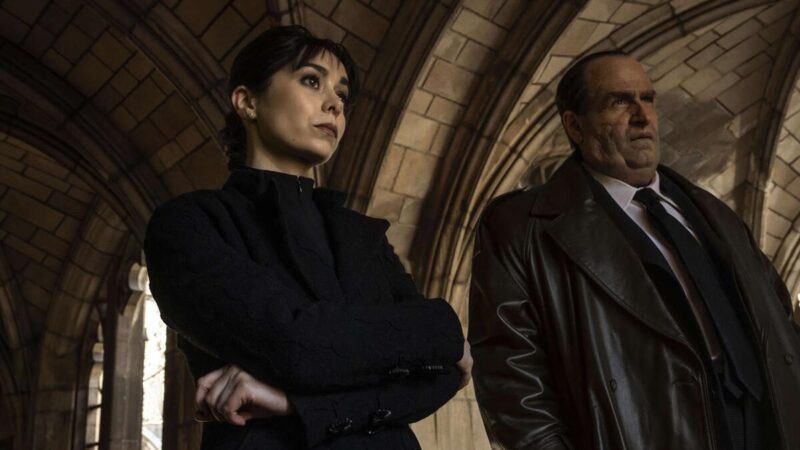
The series surrounds him with unstable alliances and enemies who know how dangerous he is. Sofia Falcone is especially important: her relationship with Oz adds another layer of psychological pressure, mistrust and resentment. Their struggle is not simply a fight between two criminals; it is a clash of personalities and different ways of seeking recognition.
Colin Farrell is the centre of everything
For me, the strongest element of The Penguin is the complexity that Farrell gives Oz. His portrayal combines vulnerability, charm and real menace without turning the character into a caricature. You can see why others underestimate him, but also why doing so may be a terrible mistake.
The young Victor offers another perspective on the same criminal world. He reminds us that Gotham is not simply a city where villains happen to live. It is a place whose circumstances, inequalities and opportunities help create them. That idea gives the story a social dimension beyond its family rivalries.
A crime series first, a Batman series second
The most interesting decision is the relative absence of traditional superhero spectacle. Instead, the eight-episode story explores organised crime, corruption, loyalty and the temptation to sacrifice almost anything in pursuit of control.
Gotham is more than a recognisable backdrop. It feels soaked, exhausted and morally compromised. The flooded streets, decaying spaces and oppressive interiors reflect a city in which the rules have broken down. Visually, the show borrows from crime thrillers and film noir, allowing atmosphere to carry as much weight as dialogue or action.
I particularly appreciate the way the series sustains the darker, more realistic mood of The Batman without needing Bruce Wayne to appear constantly to explain its connection to that world. Oz has enough contradictions to hold our attention on his own.
The tension between ambition and humanity
What gives the story its momentum is the contrast between Oz’s hunger for power and the emotional vulnerabilities he tries to hide. In a less careful production, the character could have become either a simple monster or an unjustifiably sympathetic antihero. Farrell’s performance lets the series explore both sides without erasing the harm Oz causes.
Sofia, Francis and Victor keep the drama from becoming a one-man showcase. Their relationships with Oz illuminate different kinds of power: inherited status, family obligation and the influence an older criminal can exert over somebody searching for a place in the world.
Final verdict: a worthy expansion of The Batman
I strongly recommend The Penguin, both to viewers who enjoyed The Batman and to anyone looking for an adult crime drama with an exceptional central performance. Its atmosphere, character writing and careful production make it much more than a disposable franchise extension.
What surprised me most is that a character who initially seemed destined for the margins could support such a focused and convincing story. The series expands Gotham by looking at the people who fight for control of its streets rather than those who patrol its rooftops.
You can also read our earlier analysis of how The Penguin expands The Batman universe, or my original Spanish review of El Pingüino.
For another crime drama built around power and dangerous loyalties, read our review of MobLand. The two shows approach organised crime from very different worlds.
For another landmark crime series built around a powerful and flawed central figure, see our review of The Sopranos.