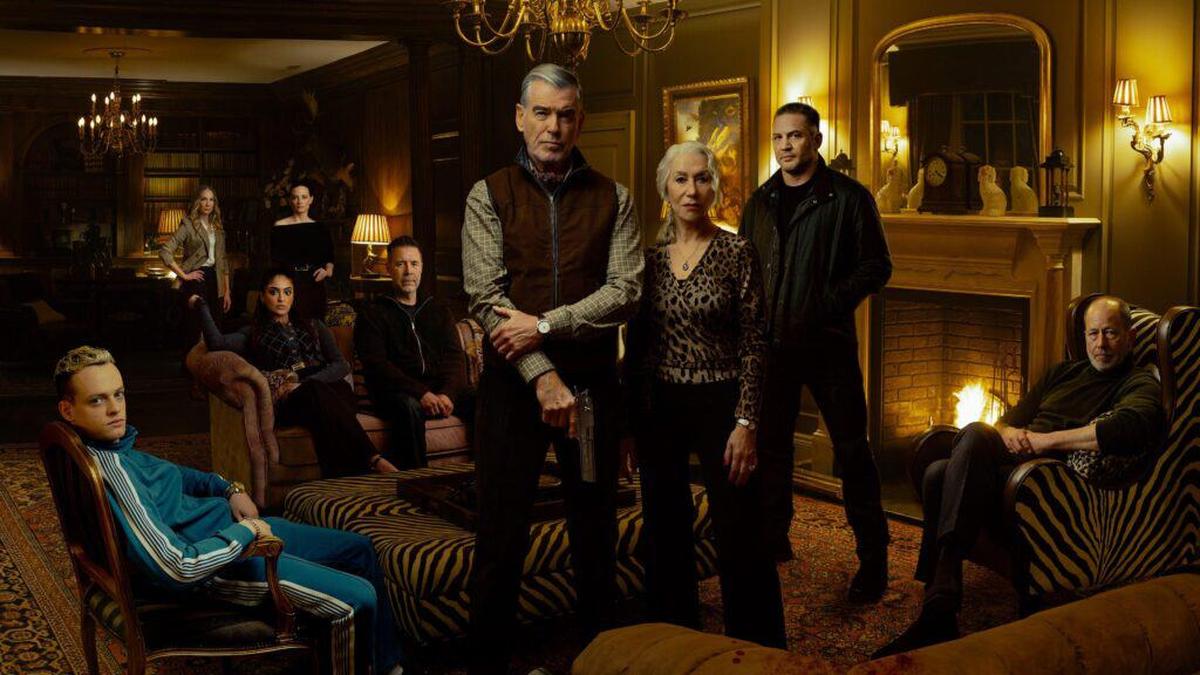
MobLand Review: Is Tom Hardy’s Mafia Series Worth Watching?
Update (27 October 2026): this review covers season one of MobLand. The ten-episode second season premiered on Paramount+ on 18 September 2026 and on SkyShowtime in Spain on 21 September; episodes are being released weekly, so it is not yet a completed-season review. Paramount has also confirmed a third-season renewal. See the official Paramount series page and SkyShowtime Spain. Our original opinion of season one remains unchanged.
MobLand (Tierra de mafiosos in Spain) brought me exactly the kind of crime drama I enjoy: competing families, shifting loyalties, a great cast and violence that can erupt in the middle of an apparently civilised conversation. It doesn’t reinvent the mafia genre, but for me it brings enough confidence, personality and dramatic energy to make the familiar formula feel worthwhile.
There is something almost Shakespearean about the way the series treats inheritance, family loyalty and the desperate need to remain in control. Beneath its expensive clothes and glamorous London locations is a story about powerful people who are never as secure as they pretend to be.
London: luxury on the surface, danger underneath
The conflict between the Harrigans and Stevensons makes London feel like an active participant in the story. Elegant offices, shadowy clubs and streets shaped by the drugs trade create an environment where privilege and criminal violence sit uncomfortably close together.
I particularly like that contrast. The production design, costumes, music and cinematography convey luxurious decadence without losing sight of the uglier world on which this power rests.
Tom Hardy, Pierce Brosnan and Helen Mirren make the difference
Tom Hardy gives Harry Da Souza a compelling mix of loyalty, pragmatism and internal conflict. He is the sort of character who can seem in control of a situation even while everyone around him is making it more dangerous.
Pierce Brosnan has enormous presence as Conrad Harrigan, a family patriarch whose authority masks the fragility of the order he has built. Helen Mirren, as Maeve, adds a quieter, more poisonous kind of manipulation. Her impact doesn’t depend on being the loudest person in a scene.
For me, the chemistry and tension between these performers are among the show’s greatest strengths. The supporting characters and younger heirs matter too, because their ambitions threaten to pull the families apart from within.
A family tragedy with violent consequences
An early killing upsets a precarious balance between criminal clans and sets a chain of betrayals and retaliation in motion. Suspicions of infiltration, hidden loyalties and ambitions within the Harrigan family make every alliance seem provisional.
The writing is at its best when it alternates quiet family encounters full of resentment with bursts of direct, stylised violence. Some of the most intense scenes work precisely because they follow moments when nobody wants to say what they really mean.
Comparisons with Peaky Blinders are understandable, but I don’t think MobLand is simply trying to reproduce it. Its contemporary setting and different family dynamics give it a distinct identity.
What makes the series worth recommending?
The setting is convincing, the performances are excellent and the direction gives the story a pace and visual energy that keep me involved. The show also touches on drugs, corruption and the relationship between criminal power and other institutions without pretending its characters are admirable.
Its weakness is that the broad ingredients are well known. In many ways, this is still a story of rivalry, blood and the defence of a family empire. But familiarity is not automatically a flaw when a series finds such an effective way of delivering it.
Final verdict
I recommend MobLand as a strong, addictive crime thriller. It does not revolutionise the genre, but it elevates its conventions with performances, atmosphere and a carefully staged conflict between loyalty and ambition.
When I originally wrote this season-one review, I wondered whether later chapters would take greater risks or simply refine a formula that already worked. Season two has since begun, as noted in the update above. Either way, the material I reviewed showed enough confidence and quality to deserve attention from fans of mafia dramas.
For another perspective on criminal families and their influence on television storytelling, see our analysis of The Sopranos. The original opinion is available in my Spanish review of MobLand.
For another modern crime story centred on ambition and power, see our review of The Penguin, a Gotham series that operates as a mob drama.
Another modern take on mob power and the people running criminal empires is our review of Tulsa King, starring Sylvester Stallone.