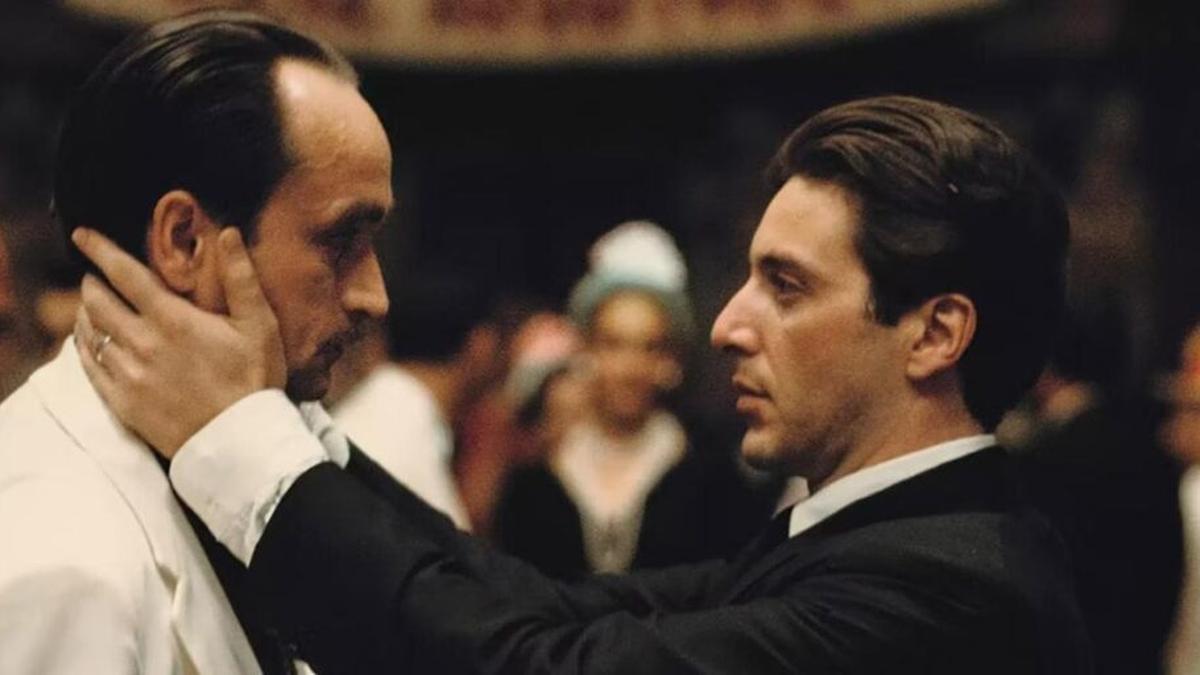
The Godfather Part II: Why I Think It Surpasses the Original
Calling The Godfather Part II better than The Godfather sounds almost provocative. The first film changed the grammar of gangster cinema and remains one of its defining achievements. But I do believe that the sequel goes further in several important respects. It expands the characters, complicates the moral questions and turns the story of a criminal family into a far darker meditation on power.
What makes that achievement so remarkable is its respect for the original. Francis Ford Coppola did not try to replace the film’s identity with something flashier or more accessible. Instead, he explored what the first story had set in motion, deepening the world without betraying it.
The almost impossible challenge of following a masterpiece
Most sequels carry the burden of comparison; this one followed a film that had established an enormous standard. Coppola made the problem even harder by structuring the continuation around two stories in different periods: Michael Corleone’s increasingly isolated leadership and the younger Vito Corleone’s rise to power.
On paper, that could easily have felt like two competing movies. For me, it becomes the very reason the sequel works so brilliantly.
Two timelines, one devastating contrast
As we watch Vito build his position from almost nothing, we also watch Michael struggle to hold together an empire that has already reached its height. Their methods, personalities and understanding of loyalty are deliberately contrasted.
Vito establishes authority through personal relationships and a code that, however compromised, still contains something recognisably human. Michael rules through suspicion and an ever more ruthless calculation of threats. One man seems to build something; the other destroys what he has inherited.
The parallel structure is not a decorative storytelling trick. It reveals the emotional cost of power and the tragedy of a family whose success gradually becomes the source of its collapse.
Al Pacino’s Michael: power as a prison
Al Pacino gives one of the most devastating performances of his career. Michael is no longer the reluctant son drawn into the family business. He is a leader who has become cold, guarded and incapable of trusting even the people closest to him.
The more determined he becomes to protect what he controls, the more isolated he grows. What might have looked like authority in the first film becomes a trap in the second. I find that transformation both impressive and deeply disturbing.
Robert De Niro and the birth of Vito Corleone
Robert De Niro gives the younger Vito an entirely different kind of presence. He is an immigrant learning how to survive and gain respect in a hostile environment. The film does not erase the violence of his choices, but it allows us to understand why people come to follow him.
Seeing these two men beside one another — though separated by time — is one of the finest exercises in character writing I can remember from cinema. The contrast makes Michael’s story even more tragic.
A darker, more mature visual language
The film is sober and patient, filled with shadow, silence and restrained tension. Rather than constantly trying to impress us, it trusts its characters and the audience. A conversation can feel as dangerous as an act of violence, and a moment of silence can tell us more than a lengthy explanation.
This is another reason I consider the sequel unusually mature. It is willing to make the experience less comforting as the story grows more complex.
The destruction of the family
At the centre of Part II lies a contradiction: Michael claims to defend the family while sacrificing the very relationships that might have given his success meaning. His need for control damages the people he most wants to keep close.
The final images of Michael alone are among the most affecting I have seen in a gangster film. They offer neither redemption nor consolation, only the weight of decisions that cannot be undone.
So is Part II really better?
In several respects, yes — that is my view. I do not say this to diminish the original. Without the first film’s achievement, the sequel would not carry the same meaning. But the dual timeline, the confrontation between Vito and Michael and the more searching treatment of power make the second film an extraordinary continuation.
It is not better because it abandons the foundation. It is better because it knows exactly what to do with it.
Final verdict
The Godfather Part II is not simply one of the great sequels. I consider it one of cinema’s greatest achievements: ambitious, coherent, emotionally devastating and unusually intelligent in the way it extends an already exceptional story.
For more landmark films from that era, explore our selection of twentieth-century cinema and television. You can also read my original Spanish analysis of El Padrino II.
To put this sequel within the history of enduring franchises, read our survey of cinema’s greatest movie sagas.
The influence of The Godfather can also be felt in landmark television crime dramas. Our retrospective on The Sopranos explores a very different portrait of the American mob.