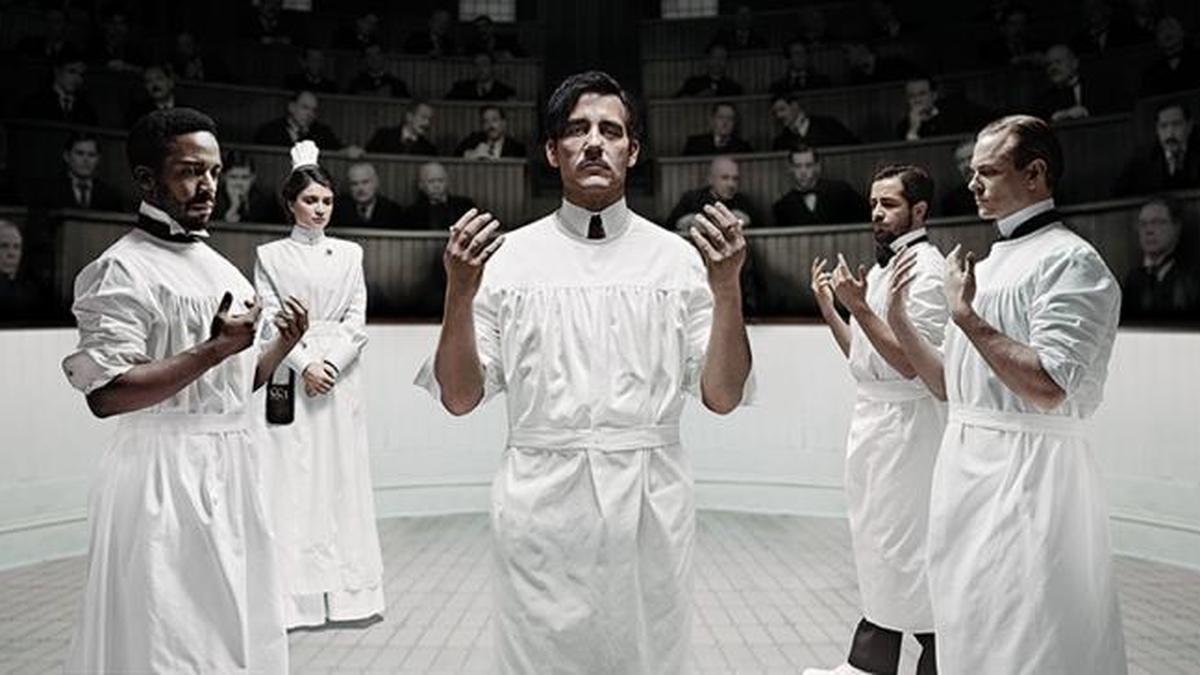
The Knick Review: Why Season One Worked Better for Me
Some series arrive at exactly the right moment. Others reach us more than a decade late and still manage to feel like an extraordinary discovery. The Knick was one of the latter for me. It first aired in 2014, but I came to it eleven years later — and I am glad I finally did.
Set in a New York hospital in the early twentieth century, this is no conventional medical drama. It makes the origins of modern medicine feel dangerous, inventive and astonishingly immediate. The setting, the performances and the willingness to confront uncomfortable aspects of medical history gave me something I rarely find in the genre.
Clive Owen: one of his finest performances
Clive Owen has an impressive film career, from Children of Men and Sin City to Inside Man. Yet I would place his work in The Knick among the most complete performances I have seen from him.
His doctor is brilliant, driven and deeply self-destructive. He is ahead of his time in some ways, but profoundly imperfect in others. That combination matters: he is not a simple hero doing everything right in a difficult hospital. He is full of contradictions, and Owen makes those contradictions fascinating.
Why the medical setting feels so different
Most hospital series — whether House, Grey’s Anatomy, The Good Doctor or New Amsterdam — work within the broad outlines of modern medicine. The Knick takes us to a period when techniques we now consider basic were still being developed, tested or disputed.
The operations can be graphic, and the methods sometimes seem startlingly primitive. But that is precisely what gives the drama its personality. We are watching people take risks at a point when progress is uncertain and the consequences of failure can be devastating.
Despite the years since its release, the visual effects and direction still impressed me. It does not feel like a period drama trapped by its production date; the historical atmosphere gives it a freshness of its own.
Season one or season two?
Here is where my opinion may differ from a purely technical evaluation. I enjoyed season one more. Its novelty was so strong, and its medical world so unlike anything I was used to, that I was hooked almost immediately.
I can appreciate why somebody might regard season two as structurally more ambitious and better written. It broadens the narrative, develops more storylines and becomes more intricate. But there were moments when I felt it wandered too far from the protagonist who had drawn me in.
Fortunately, the series does return to its central character. Both seasons maintain a very high standard, even if that initial sense of discovery never quite repeated itself for me.
Eve Hewson and a memorable supporting cast
Eve Hewson is another performer worth paying attention to. The series benefits from an ensemble that keeps the hospital from being merely a backdrop for Owen’s character. There is a whole world of people working, struggling and making difficult decisions around him.
A small piece of trivia: Hewson is the daughter of Bono, the lead singer of U2. But what matters here is her work on screen, not her family connection.
What to watch after The Knick
If this kind of drama interests you, there are several other directions to explore. The Pitt offers a modern hospital story driven by relentless emergency-room pressure. Doc (the Italian series) is another strong option. For different styles of medical storytelling, House and New Amsterdam are worth considering.
And if you are interested in emotionally intense character drama beyond hospitals, This Is Us is one of my personal favourites.
The essentials and my verdict
The Knick runs for two seasons and twenty episodes, with episodes of roughly fifty minutes. It does not need endless seasons to make its mark.
Its strengths are easy to identify: an unusual historical setting, a commanding central performance, bold visual choices and a willingness to make medical progress look as frightening as it must sometimes have felt. Its weaker moments include some of season two’s detours and the intensity of scenes that will not suit all viewers.
I absolutely recommend it. It is not necessarily my greatest series of all time, but it is a distinctive and consistently impressive discovery that I wish I had made years earlier. Sometimes being late to a show simply means you have something excellent waiting for you.
For a very different perspective on hospital life, read our review of The Pitt. The full personal account is available in my original Spanish review of The Knick.
For another medical drama that puts its characters under extreme pressure, compare this series with our review of The Pitt season two.