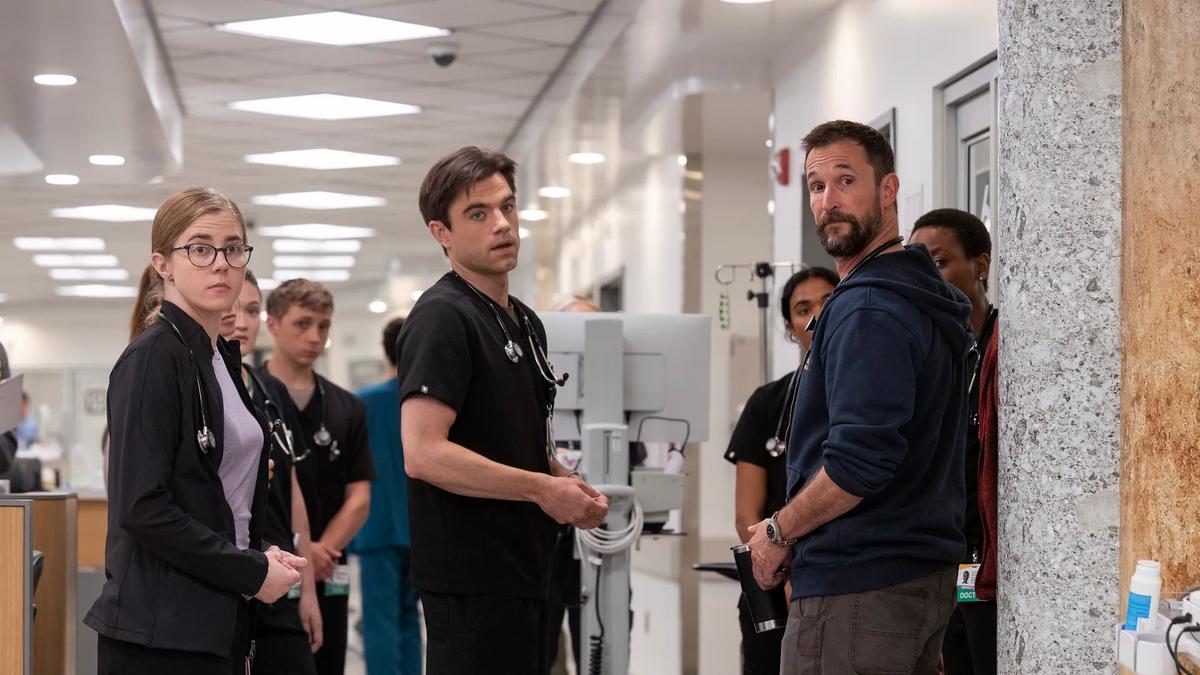
The Pitt: A Medical Drama That Feels Uncomfortably Real
The Pitt arrived in 2025 without the kind of noise that usually surrounds a television event, but it quickly made its presence felt. At first glance, another hospital drama might sound like familiar territory. What won me over was how decisively the series changed the rhythm of that familiar formula.
Rather than simply following a hospital over several weeks, The Pitt focuses on a single, exhausting emergency-room shift. Each episode represents roughly one hour in a fifteen-hour working day. That deceptively simple decision creates a sense of continuity and mounting pressure that I rarely feel in medical television.
A structure that changes everything
Because the story stays within the same shift, the staff never seem to escape the consequences of what happened an hour earlier. Patients arrive, decisions have to be made quickly and emotional exhaustion begins to accumulate. The chaos is not merely decoration for a weekly case-of-the-day drama: it becomes the show’s organising principle.
For me, the format is both the most distinctive feature of The Pitt and the main reason it is so easy to become absorbed in the story. It feels as though you are being carried through the department alongside the people working there, with little opportunity to recover before the next emergency.
Noah Wyle returns to familiar territory — at a different stage of life
A major attraction is Noah Wyle, returning to the genre that made him so recognisable to a generation of viewers. He plays the senior doctor overseeing the emergency department at Pittsburgh Trauma Medical Center. His presence gives the programme an immediate authority and a welcome connection to the history of medical dramas.
Anyone who watched ER (Urgencias in Spain) will recognise that Wyle is once again comfortable in a demanding hospital setting. Yet this is not a continuation of his previous character. He is older, his responsibilities are different and the drama depends on a more mature, visibly burdened form of leadership.
That comparison with ER is almost unavoidable, and I don’t see it as a weakness. The earlier series helped define the genre for years. The Pitt takes some of that immediacy and gives it a contemporary structure of its own, rather than trading entirely on nostalgia.
An interesting aside for long-time ER fans
One of the more amusing connections in Wyle’s career is the episode of Friends in which he and George Clooney appeared together. They weren’t officially playing their ER characters, but for viewers at the time the casting provided a playful link between two enormously popular television worlds.
Realism, tension and the people behind the procedures
The series is most effective when it makes you feel the pressure of working through emergencies without relying on oversized dramatic twists. The direct visual style, constantly shifting demands and accumulated fatigue give the characters’ decisions real weight.
I wouldn’t claim that every medical situation is beyond question when judged against real-life practice. My admiration is for the narrative approach: the urgency feels convincing, and the doctors and nurses are allowed to be exhausted people rather than invulnerable heroes.
This is where The Pitt becomes about more than illness and treatment. The work has an emotional cost, and the series is interested in that burden. The stress does not disappear when one case has been resolved, because another is already arriving.
My one frustration: the weekly release
When I first followed the series, the weekly release model sometimes worked against its biggest strength. A drama built to feel like a continuous shift can lose some of its momentum when the viewer has to wait seven days for the next hour. I understand the advantages of weekly television, but in this particular case I often wished I could keep watching without interruption.
That complaint is about how the series was delivered, not about the quality of its storytelling. Viewed together, the episodes make an unusually immersive experience.
Final verdict
I strongly recommend The Pitt. In a television landscape full of familiar medical stories, it finds a distinctive angle through its hour-by-hour structure, the leadership of Noah Wyle and the pressure placed on characters who never have enough time.
It reminds me why a genre that seems to have done everything can still feel fresh when somebody changes the way a story is told. For the next chapter, you can read our analysis of the second season, or return to my original Spanish review of The Pitt.
The realism of The Pitt also invites a comparison with The Knick, while our Emmys 2025 analysis places the series in the broader television landscape.